


During flu outbreaks or in cases of respiratory illnesses such as COPD, choosing between an Oxygen Tank and an Oxygen Concentrator is an essential decision. Both play a vital role in oxygen therapy , but differ in operation, portability, and convenience.
Taking precautions during flu outbreaks can be difficult, especially for patients with COPD. Many report discomfort when wearing masks, making an Oxygen Concentrator a more comfortable and continuous solution. This article compares the advantages and disadvantages of Oxygen Tanks and Oxygen Concentrators , highlighting why VARON devices, such as the VP-2 model, represent the perfect combination of technology and healthcare.
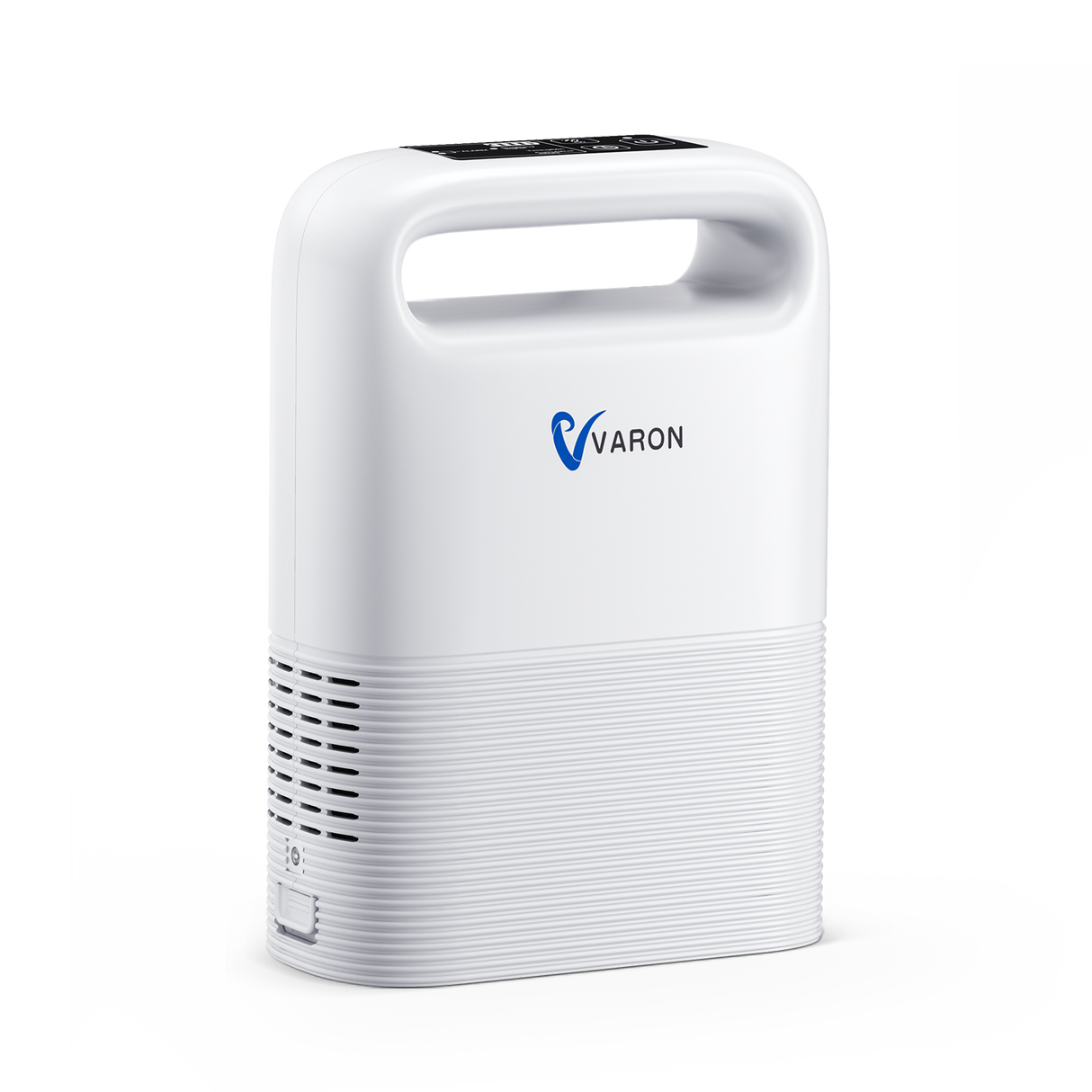
VARON VP-2 Pulse Portable Oxygen Concentrator | 93% Oxygen, Long Battery Life
What is an oxygen tank?
An oxygen tank is a pressurized container that stores oxygen in gaseous or liquid form. It is widely used in hospitals, clinics, and, in some cases, at home. By providing pure and immediate oxygen, the oxygen tank is a reliable source for medical emergencies or patients who need a high flow of oxygen.
Advantages of an Oxygen Tank:
-
Continuous supply of oxygen without the need for electricity.
-
Ideal for hospital or medical emergency situations.
-
Highly pure oxygen.
Disadvantages of the Oxygen Tank:
-
Heavy and not very portable.
-
It requires frequent recharging, which can be expensive.
-
Risk of leaks and need for careful handling.
-
It takes up space and limits the patient's mobility.
Although the oxygen tank is still useful in some situations, its lack of portability makes it less practical for daily use, especially for those who wish to remain active outside the home.
What is an Oxygen Concentrator?

An Oxygen Concentrator is a modern device that extracts oxygen from ambient air and delivers it to the patient at a concentration of approximately 93%. It does not require refills, only electricity or a battery.
A portable oxygen concentrator , such as the VARON VP-2 Pulse , is compact, quiet, and highly efficient, making it ideal for home use and travel. It is especially advantageous during flu season, when maintaining adequate oxygenation and avoiding unnecessary hospital visits is important.
Advantages of an Oxygen Concentrator:
-
Continuous supply of oxygen without the need for refills.
-
Lightweight, portable, and easy to carry.
-
Silent and comfortable operation.
-
It promotes freedom and mobility for the patient.
-
Long-term economic outlook.
Disadvantages of Oxygen Concentrators:
-
It depends on electricity or a battery.
-
It requires regular cleaning and maintenance.
Despite these minor requirements, the Oxygen Concentrator is seen as the most practical and reliable solution for home oxygen therapy .
VARON VP-2: Comfort, Quality and Breathing Freedom

VARON has conquered the market with high-quality equipment that offers comfort and safety to users. The VARON VP-2 Pulse Portable Oxygen Concentrator is a remarkable example of advanced technology and ergonomic design.
Main Specifications:
-
Brand: VARON
-
Oxygen flow: Adjustable from level 1 to 5.
-
Oxygen concentration: 93% ± 3%
-
Noise: ≤58 dB(A) – silent operation
-
Weight: Only 2.2 kg
-
Battery: Long-lasting rechargeable battery (92 Wh / 6400 mAh)
-
Power source: DC 12~16.8V / AC 100~240V
The VARON VP-2 comes with a convenient carrying case, nasal tubing, filters, and adapters for home and car use. This ensures that the patient can continue therapy wherever they are—at home, outdoors, or while traveling.
Furthermore, the VARON VP-2 Oxygen Concentrator is CE certified, guaranteeing its safety and reliability.
Simple Maintenance and Care
The durability of the Oxygen Concentrator depends on simple and regular maintenance:
-
Clean the surface with a soft cloth.
-
Clean the filter monthly to prevent dust and extend its lifespan.
-
Replace the cotton filter after 100–200 hours of use.
-
Replace the nasal cannula as directed — usually every two months with continuous use.
These measures keep the Oxygen Concentrator efficient and safe, ensuring optimal oxygen flow.
Oxygen Tank vs. Oxygen Concentrator: Which to Choose?

The choice between an oxygen tank and an oxygen concentrator depends on the patient's needs.
-
For medical emergencies and hospitals, the Oxygen Tank is still useful.
-
For daily use, comfort, and mobility, the Oxygen Concentrator is the best option.
During flu outbreaks or periods of high pollution, an Oxygen Concentrator is an essential tool for protecting your respiratory health . It allows patients with COPD or other conditions to continue with their routine, receiving oxygen continuously and comfortably.
With the VARON VP-2 , oxygen therapy becomes simple and safe — ideal for those seeking autonomy, quality, and well-being.
Key Takeaways
-
An oxygen concentrator is more practical, portable, and economical than an oxygen tank .
-
The VARON VP-2 Pulse offers 93% oxygen purity and long battery life.
-
It is the ideal solution for patients with COPD and for use during flu outbreaks.
-
Easy maintenance and quiet operation increase user comfort.
-
VARON offers a reliable warranty and support for all its products.
Conclusion
In summary, both the Oxygen Tank and the Oxygen Concentrator play important roles in respiratory therapy, but the VARON VP-2 Oxygen Concentrator offers unparalleled freedom, safety, and comfort.
During flu or respiratory crises, opting for a modern and portable device like the VP-2 is a smart and protective choice for your health. With VARON 's quality and guarantee, you breathe better, live better, and feel the difference.